Tootsie Roll Nutrition Info: Calories, Allergens & Ingredien
TL;DR: Tootsie Roll nutrition info shows that one midgee piece contains approximately 23 calories, 0.5g fat, 5g carbohydrates, and 4g sugar. A standard Tootsie Roll is gluten-free and contains no major allergens like nuts or dairy, though it does include soy and artificial ingredients. Serving sizes vary by product size.
Frequently Asked Questions

What is the nutrition info for Tootsie Rolls?
A standard Tootsie Roll serving (6 pieces, 40g) contains approximately 140 calories, 3g of fat, 27g of carbohydrates, and 1g of protein. They contain no cholesterol and provide about 10mg of sodium. Tootsie Rolls are primarily made of sugar and corn syrup, making them a high-carbohydrate candy with minimal nutritional value beyond energy content.
Are Tootsie Rolls gluten-free snacks?
Yes, Tootsie Rolls are generally considered gluten-free as they don't contain wheat, barley, or rye ingredients. However, they are not certified gluten-free and may be processed in facilities that handle gluten-containing products. People with celiac disease or severe gluten sensitivity should check the packaging for allergen statements or use a barcode scanning app to verify current manufacturing practices.
How many calories are in one Tootsie Roll?
A single midgee-sized Tootsie Roll contains approximately 23 calories. The original-sized Tootsie Roll has about 60 calories, while the larger versions can contain 140 calories or more per serving. The calorie content varies based on the size and type of Tootsie Roll product, with most calories coming from carbohydrates and sugars.
What allergens are in Tootsie Rolls?
Tootsie Rolls contain milk and soy as primary allergens. They may also contain traces of tree nuts and peanuts due to shared manufacturing equipment. Tootsie Rolls do not contain eggs, fish, shellfish, or wheat. Using an allergen scanning app can help identify the 14 major allergens, traces, and additives in current Tootsie Roll products.
Are Tootsie Rolls low-carb or keto-friendly?
No, Tootsie Rolls are not low-carb or keto-friendly. A standard serving contains 27g of carbohydrates, primarily from sugar. Unlike breads with no carbs or low-carb alternatives, Tootsie Rolls are candy made predominantly of sugar and corn syrup, making them unsuitable for low-carbohydrate or ketogenic diets.
How can I check Tootsie Roll nutrition info and allergens quickly?
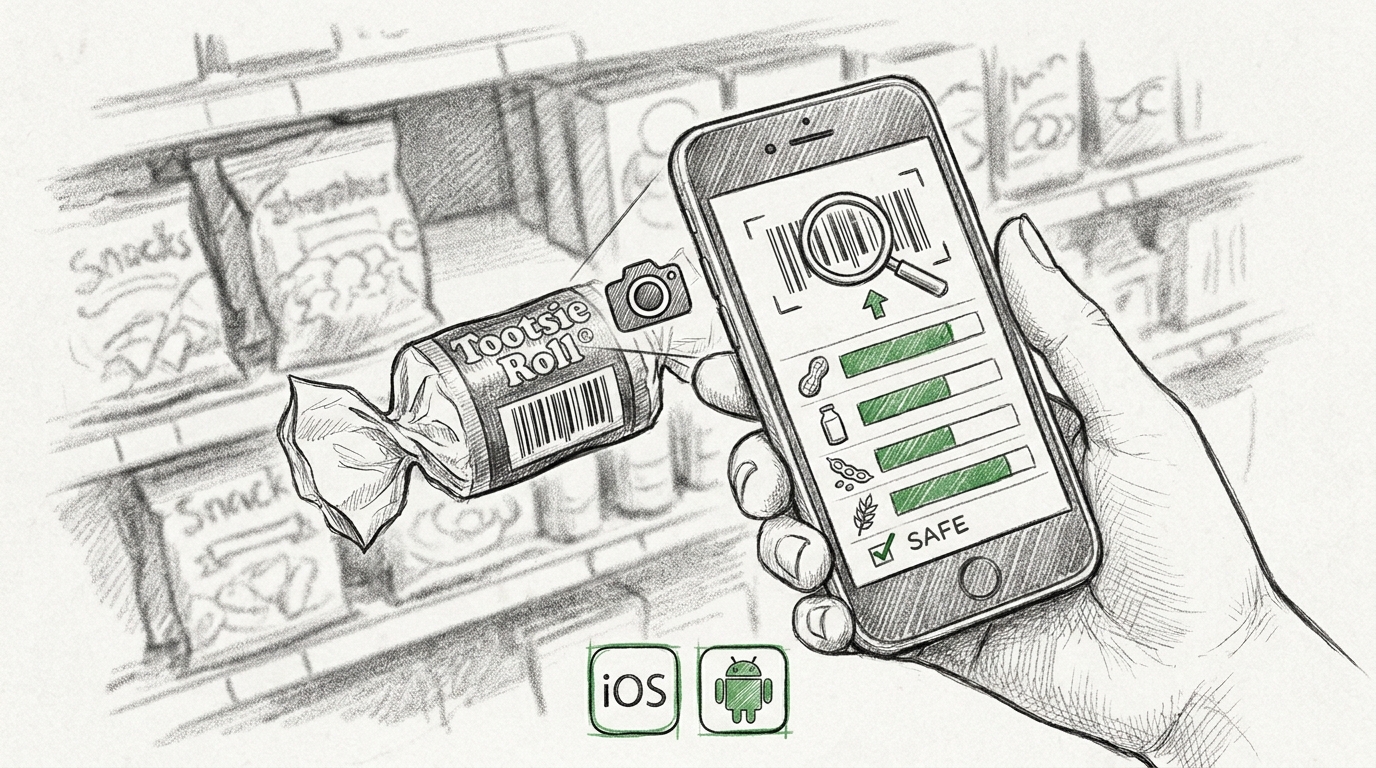
You can scan the barcode on Tootsie Roll packaging using allergen detection apps available on iOS and Android. These apps instantly identify up to 14 different allergens, traces, additives, and preservatives in the product. This method is faster and more reliable than manually reading ingredient labels, especially for people with multiple food allergies or sensitivities.
Do Tootsie Rolls contain any preservatives or additives?
Yes, Tootsie Rolls contain several additives including artificial and natural flavors, partially hydrogenated soybean oil, and condensed skim milk. They also contain food-grade waxes and emulsifiers to maintain texture. While these additives are FDA-approved, scanning the barcode with an allergen detection app can provide detailed information about all preservatives and additives present.
What is the sugar content in Tootsie Roll nutrition info?
A standard serving of Tootsie Rolls (6 pieces, 40g) contains approximately 19-20g of sugar, which accounts for most of the 27g total carbohydrates. This represents about 40% of the recommended daily sugar intake for adults. The primary ingredients are sugar and corn syrup, making Tootsie Rolls a high-sugar candy with minimal nutritional benefits.
Understanding Tootsie Roll Nutrition Info: A Complete Guide for Allergy-Conscious Consumers

When you're managing food allergies or dietary restrictions, understanding the tootsie roll nutrition info becomes essential for making safe snacking decisions. These iconic chocolate-flavored candies have been an American favorite for over a century, but what exactly are you consuming when you unwrap one of these chewy treats?
Whether you're a parent managing children's dietary restrictions, someone with specific food sensitivities, or simply a health-conscious consumer, knowing the complete nutritional breakdown and allergen profile of Tootsie Rolls helps you make informed choices. This comprehensive guide breaks down everything from calories and macronutrients to potential allergens and ingredient concerns.
In today's world of food transparency, having access to detailed nutrition information is more important than ever. Just as consumers use tools like a chipotle nutrition calculator to track their meals, understanding candy nutrition helps maintain dietary awareness across all food choices.
Complete Tootsie Roll Nutrition Facts Breakdown

The standard Tootsie Roll serving size consists of six pieces (40 grams), though individual mini Tootsie Rolls and larger sizes are also available. Understanding the nutritional content helps you make informed decisions about portion control and daily intake.
Calorie Content and Serving Sizes
A standard serving of six Tootsie Roll Midgees contains approximately 140-150 calories. This makes them a relatively moderate-calorie candy option compared to chocolate bars with nuts or caramel fillings.
For comparison purposes, here's how different Tootsie Roll sizes stack up:
| Product Size | Weight | Calories | Pieces per Serving |
|---|---|---|---|
| Midgees (Standard) | 40g | 140-150 | 6 pieces |
| Mini Tootsie Rolls | 15g | 55-60 | 4 pieces |
| Large Tootsie Roll | 64g | 230-240 | 1 piece |
| Single Midgee | 7g | 23-25 | 1 piece |
Macronutrient Profile
The macronutrient distribution in Tootsie Rolls reveals their composition as primarily a carbohydrate-based candy. Understanding this breakdown is crucial for those monitoring their daily intake, similar to checking chipotle nutrition info for meal planning.
Per six-piece serving (40g), Tootsie Rolls typically contain:
- Total Fat: 2-3 grams (approximately 3-4% daily value)
- Saturated Fat: 1.5-2 grams
- Trans Fat: 0 grams
- Total Carbohydrates: 31-33 grams (11-12% daily value)
- Dietary Fiber: 0 grams
- Total Sugars: 19-21 grams
- Protein: Less than 1 gram
Micronutrients and Minerals
Tootsie Rolls provide minimal micronutrient value, which is typical for candy products. A standard serving contains trace amounts of iron and calcium, but these amounts are negligible compared to daily recommended values.
The sodium content is relatively low at approximately 10-15 milligrams per serving, making Tootsie Rolls a low-sodium snack option. However, they offer virtually no vitamins, fiber, or beneficial minerals that contribute to nutritional health.
Ingredient Analysis: What's Inside a Tootsie Roll?
Reading ingredient labels is fundamental for anyone with food allergies or sensitivities. Tootsie Rolls contain a relatively short ingredient list compared to many modern candies, but each component deserves attention.
Primary Ingredients
The main ingredients in Tootsie Rolls include:
- Sugar: The primary ingredient, providing the sweet taste and bulk of the candy
- Corn Syrup: Acts as a sweetener and helps create the chewy texture
- Partially Hydrogenated Soybean Oil: Provides fat content and contributes to texture
- Condensed Skim Milk: Adds creaminess and is a key allergen to note
- Cocoa: Provides the chocolate flavor
- Whey (Milk): Another milk-derived ingredient that enhances texture
- Soy Lecithin: An emulsifier that helps blend ingredients
- Artificial and Natural Flavors: Enhance the chocolate taste
Additives and Preservatives
For health-conscious consumers avoiding specific additives and preservatives, it's important to note that Tootsie Rolls contain relatively few artificial additives compared to many modern candies. However, they do include artificial flavors and partially hydrogenated oils.
The partially hydrogenated soybean oil, while containing zero grams of trans fat per serving, has been a topic of health discussions. The manufacturing process has been adjusted to minimize trans fat content while maintaining the signature chewy texture.
Allergen Information: Critical Details for Sensitive Consumers
Understanding allergen content is paramount for individuals with food allergies or intolerances. Tootsie Rolls contain several common allergens that require careful consideration before consumption.
Confirmed Allergens in Tootsie Rolls
Tootsie Rolls contain the following confirmed allergens:
| Allergen | Present | Source Ingredient |
|---|---|---|
| Milk/Dairy | Yes | Condensed skim milk, whey |
| Soy | Yes | Soybean oil, soy lecithin |
| Gluten | No* | N/A |
| Tree Nuts | No** | N/A |
| Peanuts | No** | N/A |
| Eggs | No | N/A |
| Fish/Shellfish | No | N/A |
*While Tootsie Rolls don't contain gluten ingredients, cross-contamination is possible
**May be produced in facilities that process tree nuts and peanuts
Cross-Contamination Considerations
For individuals with severe allergies, cross-contamination risks are as important as direct ingredients. Tootsie Roll Industries manufactures various products in shared facilities, which may process multiple allergens.
Always check the specific package labeling for "may contain" statements, as manufacturing processes and facility practices can change. Using tools like an allergy checker app can help you quickly scan products and identify potential allergen risks.
Gluten-Free Status
Many consumers wonder about the gluten-free status of Tootsie Rolls, especially those with celiac disease or gluten sensitivities. While Tootsie Rolls don't contain wheat, barley, or rye ingredients, they are not certified gluten-free.
This is similar to questions about other popular foods like whether grits are gluten free or if tortilla chips are gluten free. The absence of gluten ingredients doesn't guarantee zero cross-contamination risk.
For those seeking confirmed gluten-free snacks, consider exploring options from a dedicated gluten free bakery or products specifically labeled as certified gluten-free alternatives.
Comparing Tootsie Rolls to Other Popular Treats
Understanding how Tootsie Rolls stack up nutritionally against other candies and snacks helps put their nutrition info into perspective. This comparison is valuable for making informed snacking decisions across various food choices.
Candy Nutrition Comparison
| Candy Type | Calories | Total Fat (g) | Sugars (g) | Protein (g) |
|---|---|---|---|---|
| Tootsie Rolls | 140-150 | 2-3 | 19-21 | <1 |
| Milk Chocolate Bar | 210-220 | 12-13 | 22-24 | 3-4 |
| Gummy Bears | 130-140 | 0 | 28-30 | 2-3 |
| Hard Candies | 150-160 | 0 | 38-40 | 0 |
| Peanut Butter Cups | 200-210 | 12-14 | 20-22 | 4-5 |
How Tootsie Rolls Fit Into Different Diets
When comparing snack options, it's helpful to understand how Tootsie Rolls align with various dietary approaches. Unlike breads with no carbs or low-carb alternatives, Tootsie Rolls are carbohydrate-dense treats best enjoyed in moderation.
For those seeking gluten-free foods snacks, Tootsie Rolls may be an option, though verification of current manufacturing practices is essential. They don't qualify as keto-friendly or low-carb snacks due to their high sugar content.
Health Considerations and Dietary Impact
While Tootsie Rolls can fit into a balanced diet when consumed occasionally, understanding their health impact helps make informed decisions about frequency and portion sizes.
Sugar Content and Blood Glucose Impact
With 19-21 grams of sugar per serving, Tootsie Rolls deliver a significant glucose spike. This is approximately 40-50% of the recommended daily sugar intake for adults, based on American Heart Association guidelines.
For individuals managing diabetes or blood sugar levels, timing and portion control become crucial. The lack of fiber means these sugars are absorbed quickly without the buffering effect that whole foods provide.
Dental Health Considerations
The chewy texture of Tootsie Rolls presents specific dental concerns. The candy's stickiness allows it to adhere to teeth longer than chocolate that melts quickly, potentially increasing cavity risk.
- Prolonged contact time with tooth enamel increases acid production
- Sticky residue can lodge between teeth and in crevices
- Sugar provides fuel for cavity-causing bacteria
- Regular brushing after consumption helps minimize damage
Portion Control Strategies
Managing portion sizes helps enjoy Tootsie Rolls while maintaining dietary balance. Consider these strategies:
- Pre-portion servings into small containers rather than eating from the bag
- Limit consumption to special occasions rather than daily snacking
- Pair with protein or healthy fats to slow sugar absorption
- Track intake alongside other treats using nutrition tracking methods
Special Dietary Considerations and Alternatives
For those with specific dietary needs or restrictions, understanding whether Tootsie Rolls fit your requirements—and what alternatives exist—is essential for maintaining both safety and satisfaction.
Vegan and Vegetarian Status
Tootsie Rolls are not suitable for vegans due to the presence of condensed skim milk and whey. These dairy-derived ingredients make them non-vegan, though they are acceptable for lacto-vegetarians who consume dairy products.
Vegans seeking chocolate-flavored chewy candies should look for alternatives made with plant-based ingredients and clearly labeled as vegan-certified.
Kosher and Halal Certification
Tootsie Rolls are certified Kosher (OU-D), meaning they meet Orthodox Union dairy standards. However, they are not certified Halal, which may be a consideration for Muslim consumers following strict dietary laws.
Alternatives for Restricted Diets
For those who cannot consume Tootsie Rolls due to allergies or dietary restrictions, several alternatives exist:
- Dairy-free chocolate candies: Made with coconut milk or other plant-based alternatives
- Allergen-free candy brands: Specifically manufactured in dedicated facilities
- Fruit-based chews: Natural options without dairy or soy
- Dark chocolate squares: Often dairy-free and lower in sugar per piece
Just as consumers compare options for Cinnamon Toast Crunch nutrition or check taco bell nutrition info for dietary planning, exploring candy alternatives requires careful label reading and ingredient verification.
Reading Labels and Making Informed Choices
Developing strong label-reading skills empowers you to make safe, informed decisions about Tootsie Rolls and all packaged foods. This skill becomes increasingly important when managing allergies or dietary restrictions.
Key Label Components to Check
When examining Tootsie Roll packaging or any candy product, focus on these critical areas:
- Ingredient list: Listed in descending order by weight, showing what comprises the product
- Allergen statement: "Contains" statements identify confirmed allergens
- Advisory warnings: "May contain" or "processed in a facility with" statements
- Nutrition Facts panel: Provides serving size, calories, and nutrient breakdown
- Date codes: Ensure product freshness and quality
Using Technology for Allergen Scanning
Modern technology makes allergen identification faster and more reliable. Smartphone apps can scan barcodes and instantly identify potential allergens, similar to using a chipotle calorie count tool for restaurant meals.
The Allerwise food allergy scanner app enables you to quickly scan products and detect 14 different allergens, traces, additives, and preservatives. This technology provides peace of mind when shopping for yourself or managing children's dietary restrictions.
When to Contact Manufacturers
Sometimes package information doesn't answer all questions, especially regarding manufacturing processes or ingredient sourcing. Contact manufacturers directly when:
- Cross-contamination risk information is unclear
- Ingredient sources need clarification (e.g., natural flavors)
- Manufacturing facility practices have changed
- Specific allergen protocols need verification
Tootsie Rolls in Context: Balanced Nutrition Approach
Understanding tootsie roll nutrition info is part of a broader approach to balanced eating. While these treats don't offer significant nutritional benefits, they can fit into an overall healthy diet when consumed mindfully.
The 80/20 Principle
Many nutritionists recommend the 80/20 approach: eating nutrient-dense whole foods 80% of the time while allowing treats like Tootsie Rolls for the remaining 20%. This balanced approach prevents feelings of deprivation while maintaining overall health.
Compare this to making informed choices at restaurants by checking texas roadhouse nutrition info or understanding baked potato calories when dining out. Knowledge empowers better decisions across all eating situations.
Teaching Children About Nutrition
For parents managing children's dietary restrictions, Tootsie Rolls present teaching opportunities about moderation, label reading, and making informed choices. Rather than completely forbidding treats, use them as educational moments.
Discuss why checking labels matters, how to identify allergens, and what appropriate portion sizes look like. This education builds lifelong skills for navigating food choices independently.
Mindful Consumption Practices
Practicing mindfulness when enjoying treats enhances satisfaction while naturally limiting overconsumption:
- Eat slowly, savoring each bite rather than rushing
- Remove distractions like screens to focus on the eating experience
- Notice flavors, textures, and how the candy makes you feel
- Stop when satisfied rather than finishing a predetermined amount
Frequently Overlooked Nutrition Facts
Beyond the basic nutrition label, several lesser-known facts about Tootsie Rolls deserve attention for comprehensive understanding.
Manufacturing Process Impact
The unique chewy texture of Tootsie Rolls results from a specific manufacturing process that combines chocolate and taffy-making techniques. This process affects both texture and shelf stability, allowing Tootsie Rolls to maintain quality longer than many chocolate products.
The extended shelf life means fewer preservatives are needed, which some consumers prefer when avoiding specific additives.
Serving Size Reality Check
The listed serving size of six pieces may not reflect typical consumption patterns. Many people eat more or fewer pieces in one sitting, which significantly impacts actual calorie and sugar intake.
Being honest about actual consumption helps maintain accurate nutritional tracking, whether you're monitoring candy intake or checking cottage cheese nutrition for meal planning.
Seasonal and Variety Differences
Tootsie Roll Industries produces various flavors and seasonal varieties. Nutrition information can vary slightly between:
- Original chocolate Tootsie Rolls
- Fruit-flavored Tootsie Rolls (Frooties)
- Tootsie Pops (lollipops with Tootsie Roll centers)
- Tootsie Roll Mini Bites
Always check specific product labels, as flavored varieties may contain different allergens or nutritional profiles.
Pet Safety Considerations
While discussing human nutrition, it's worth noting that Tootsie Rolls should never be given to pets. The chocolate content, though minimal, combined with sugar and other ingredients, makes them inappropriate and potentially harmful for dogs and cats.
If you're wondering about safe treats for pets, questions like can dogs eat greek yogurt are more relevant than sharing human candy. Always consult veterinary resources for appropriate pet nutrition guidance.
Making Tootsie Rolls Work in Your Diet
If you've determined that Tootsie Rolls are safe for your dietary needs and you enjoy them, strategic incorporation helps maintain balance.
Smart Snacking Strategies
Consider these approaches for including Tootsie Rolls without derailing nutritional goals:
- Post-workout timing: Consume after exercise when your body can utilize quick sugars for glycogen replenishment
- Dessert substitution: Choose a few Tootsie Rolls instead of a larger dessert portion
- Special occasion treats: Reserve for celebrations rather than daily consumption
- Combination strategy: Pair with nuts or seeds to add protein and healthy fats
Tracking and Accountability
Whether you use a food diary, nutrition app, or simply maintain mental awareness, tracking treat consumption helps maintain dietary balance. This is similar to using tools for tracking meals, like checking chicken salad nutrition info or calculating bagel with cream cheese nutrition facts.
Consistent tracking reveals patterns and helps identify whether occasional treats remain occasional or have become more frequent than intended.
Future of Allergen-Friendly Candy Options
The candy industry continues evolving to meet diverse dietary needs. While traditional Tootsie Rolls contain common allergens, market trends suggest increasing availability of allergen-friendly alternatives.
Industry Trends to Watch
Several developments are making candy more accessible for those with dietary restrictions:
- Increased transparency in labeling and manufacturing processes
- Dedicated allergen-free manufacturing facilities
- Plant-based and dairy-free chocolate alternatives
- Clear certification programs (gluten-free, vegan, allergen-free)
- Technology integration for instant allergen identification
These trends benefit consumers who need to carefully manage their food choices while still enjoying treats occasionally.
Take Control of Your Food Allergy Management
Understanding tootsie roll nutrition info represents just one piece of comprehensive allergen management. Whether you're navigating candy choices, restaurant meals, or everyday groceries, having reliable tools makes the process easier and safer.
Managing food allergies and dietary restrictions doesn't mean sacrificing enjoyment or convenience. With proper information and the right resources, you can make confident decisions about every food choice.
The Allerwise food allergy scanner app empowers you to quickly identify allergens, traces, additives, and preservatives in thousands of products. Simply scan a barcode to detect 14 different allergens instantly, making grocery shopping faster and safer for you and your family.
Available on both iOS and Android, Allerwise helps you take control of your dietary needs with confidence. Stop guessing about ingredient safety and start making informed decisions with technology designed specifically for allergy-conscious consumers.
Visit our website to download the app today and experience the peace of mind that comes from knowing exactly what's in your food. Your health and safety deserve nothing less than complete transparency and reliable information at your fingertips.
Article created using IntentRank