Ranch Dressing Nutrition: Calories, Allergens & Ingredients
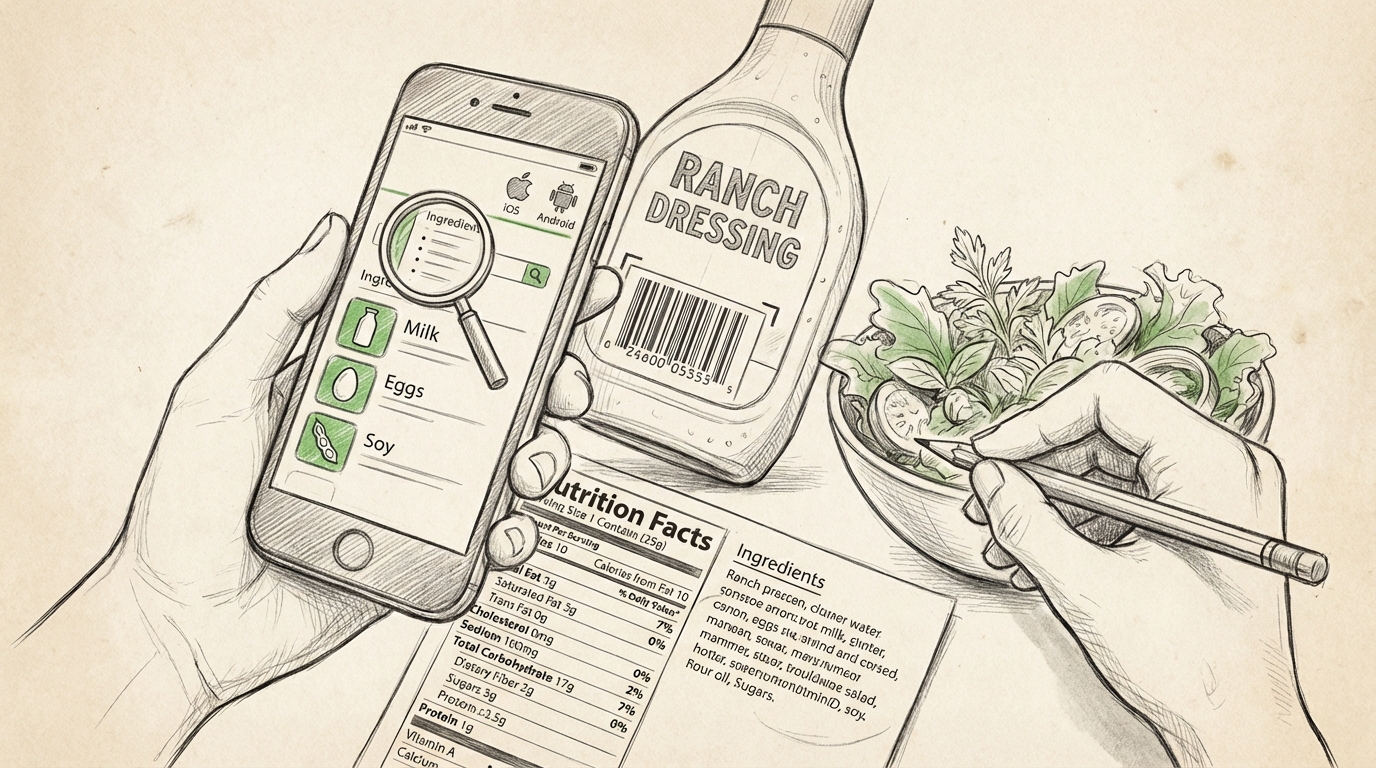
TL;DR: Ranch dressing nutrition info typically shows 129 calories, 13g fat, 2g carbs, and 1g protein per 2-tablespoon serving. Most brands contain dairy, eggs, and garlic as common allergens. Sodium content averages 260mg per serving. Check product labels or scan barcodes to identify specific allergens, additives, and preservatives in different ranch dressing varieties.
Frequently Asked Questions

What is the nutritional information for ranch dressing?
Ranch dressing typically contains 120-145 calories per 2-tablespoon serving, with 12-14g of fat, 1-2g of carbohydrates, and 1g of protein. It's high in sodium (200-350mg) and saturated fat. Light versions contain fewer calories (60-80) and less fat. Nutritional content varies by brand, so checking labels or using an allergen checker app helps identify specific ingredients and additives.
How can I check for allergens in ranch dressing?
Use an allergy checker app to scan ranch dressing barcodes and instantly identify common allergens like milk, eggs, and soy. These apps detect up to 13 different allergens, traces, additives, and preservatives in products. This is especially helpful for people with food sensitivities, as ranch dressing often contains hidden allergens and ingredients like hydroxy stearic acid or preservatives.
Does ranch dressing contain common food allergens?
Yes, ranch dressing typically contains multiple allergens including milk (buttermilk, sour cream), eggs (in mayonnaise base), and sometimes soy. Some brands may also contain wheat or gluten. People with allergies should carefully read labels or use barcode scanning apps to verify ingredients, as formulations vary between brands and even different product lines from the same manufacturer.
What additives and preservatives are found in ranch dressing?
Ranch dressing commonly contains preservatives like potassium sorbate, calcium disodium EDTA, and phosphoric acid to extend shelf life. Some brands use poly carboxylic acid or methane sulfonic acid derivatives as stabilizers. Additives include xanthan gum, modified food starch, and artificial flavors. Scanning products with an allergen detection app helps identify these ingredients and their potential health impacts.
How does Chipotle's ranch dressing nutrition compare to store-bought brands?
Chipotle doesn't offer traditional ranch dressing, but their Chipotle-Honey Vinaigrette contains 220 calories per serving. Using a Chipotle nutrition calculator helps track nutritional information for complete meals. Store-bought ranch typically has 120-145 calories per 2-tablespoon serving. Restaurant versions often contain more calories and sodium than bottled varieties, making nutrition tracking tools essential for dietary management.
Is ranch dressing gluten-free?
Most ranch dressings are naturally gluten-free, as they're made from buttermilk, mayonnaise, and herbs. However, some brands add wheat-based thickeners or malt vinegar containing gluten. Cross-contamination during manufacturing is also possible. People seeking gluten-free options should look for certified gluten-free labels or use an allergen checker app to scan products, similar to checking gluten free wheat free beer or gluten free cheese-its.
Can I use a nutrition calculator to track ranch dressing calories?
Yes, nutrition calculators and allergen checker apps help track ranch dressing calories and nutritional content. These tools let you scan barcodes to access detailed nutrition info, including calories, fat, sodium, and allergens. Similar to using a Chipotle nutrition calculator for restaurant meals, these apps provide accurate data for meal planning, dietary restrictions, and managing food allergies or sensitivities effectively.
What is the healthiest ranch dressing option?
The healthiest ranch dressing options include light or reduced-fat versions with 60-80 calories per serving, Greek yogurt-based alternatives with added protein, or homemade versions using fresh herbs and low-fat buttermilk. Look for options with lower sodium (under 200mg), no artificial preservatives, and minimal additives. Using an allergen checker app helps identify cleaner ingredient profiles and avoid unwanted chemicals or allergens.
Understanding Ranch Dressing Nutrition Info: A Complete Guide

Ranch dressing has become one of America's most beloved condiments, gracing everything from salads to chicken wings. However, understanding ranch dressing nutrition info is crucial for anyone managing food allergies, dietary restrictions, or simply trying to make healthier choices. Whether you're scanning labels at the grocery store or checking restaurant nutrition information, knowing what's in your ranch dressing can help you make informed decisions about your diet.
This comprehensive guide explores the nutritional profile of ranch dressing, common allergens to watch for, and how modern technology like an allergy checker app can simplify the process of identifying problematic ingredients. We'll also examine how ranch dressing compares across different brands and restaurant chains, including information from the chipotle nutrition calculator for those who enjoy their meals with this popular condiment.
Basic Nutritional Profile of Ranch Dressing

Ranch dressing is typically a high-calorie, high-fat condiment that can significantly impact your daily nutritional intake. Understanding the basic ranch dressing nutrition info helps you portion appropriately and make better dietary choices.
Standard Serving Size Breakdown
Most ranch dressing nutrition labels base their information on a 2-tablespoon (30ml) serving. However, many people use considerably more than this standard serving size, which can dramatically increase calorie and fat consumption.
| Nutrient | Amount | % Daily Value |
|---|---|---|
| Calories | 140-145 | 7% |
| Total Fat | 14-15g | 18-21% |
| Saturated Fat | 2-2.5g | 10-13% |
| Cholesterol | 5-10mg | 2-3% |
| Sodium | 260-340mg | 11-15% |
| Total Carbohydrates | 1-2g | 1% |
| Protein | 0-1g | 0-2% |
Calorie Density Concerns
Ranch dressing is calorie-dense, meaning it packs a lot of calories into a small volume. A single serving contains approximately 140 calories, with over 90% coming from fat. This makes it important to measure portions carefully, especially if you're monitoring caloric intake.
When dining out, restaurant portions can be even more generous. Using a chipotle nutrition calculator or similar restaurant nutrition tools can help you track exactly how much you're consuming when eating away from home.
Common Allergens in Ranch Dressing

For individuals with food allergies, understanding the allergen content in ranch dressing is essential. Ranch dressing commonly contains several major allergens that can trigger reactions in sensitive individuals.
Primary Allergen Concerns
The most common allergens found in traditional ranch dressing include:
- Milk/Dairy: Buttermilk, sour cream, and yogurt are fundamental ingredients in most ranch dressing recipes
- Eggs: Many brands use eggs or egg yolks as emulsifiers and to add richness
- Soy: Soybean oil is a common base ingredient, and soy lecithin may be used as an emulsifier
- Fish: Some brands include anchovies or fish sauce for umami flavor
- Wheat/Gluten: Less common but may appear in modified food starch or as a thickening agent
Using a food allergy app can help you quickly scan ranch dressing products to identify these allergens before purchase. These apps detect up to 13 different allergens, making grocery shopping safer and more efficient for people with dietary restrictions.
Hidden Ingredients and Cross-Contamination
Beyond the obvious allergens, ranch dressing may contain traces of other problematic ingredients due to manufacturing processes. Cross-contamination can occur in facilities that process multiple products, potentially exposing your dressing to allergens not listed in the primary ingredients.
Some hidden ingredients to watch for include:
- Modified food starch (may contain wheat)
- Natural flavors (can be derived from various allergen sources)
- Xanthan gum (generally safe but may be corn-derived)
- Maltodextrin (typically corn-based but occasionally wheat-derived)
Chemical Additives and Preservatives in Ranch Dressing
Commercial ranch dressings often contain various chemical additives to extend shelf life, maintain texture, and enhance flavor. Understanding these ingredients is important for health-conscious consumers and those avoiding specific preservatives.
Common Preservatives and Stabilizers
Ranch dressing manufacturers use several chemical compounds to maintain product quality:
- Hydroxy stearic acid: Sometimes used as an emulsifier to keep oil and water-based ingredients mixed
- Methane sulfonic acid: May appear in pH adjustment or as a processing aid in some formulations
- Poly carboxylic acid: Used in some brands as a stabilizer and to prevent separation
- Calcium disodium EDTA: Prevents oxidation and maintains freshness
- Potassium sorbate: Inhibits mold and yeast growth
- Sodium benzoate: Common preservative that extends shelf life
While these additives are generally recognized as safe by regulatory agencies, some consumers prefer to avoid them. An allergy checker app can help identify products containing specific preservatives and additives, allowing you to make choices aligned with your dietary preferences.
Natural vs. Artificial Ingredients
The debate between natural and artificial ingredients extends to ranch dressing. Some brands market themselves as "natural" or "organic," avoiding synthetic preservatives and using alternative preservation methods like vinegar, citric acid, or refrigeration requirements.
| Ingredient Type | Traditional Ranch | Natural Ranch |
|---|---|---|
| Preservatives | Potassium sorbate, sodium benzoate | Vinegar, citric acid |
| Emulsifiers | Polysorbate 60, hydroxy stearic acid | Egg yolk, mustard |
| Thickeners | Modified food starch, xanthan gum | Guar gum, arrowroot |
| Shelf Life | 12+ months unopened | 6-9 months unopened |
Ranch Dressing Nutrition Info Across Popular Brands
Not all ranch dressings are created equal. Different brands vary significantly in their nutritional profiles, ingredient lists, and allergen content. This section compares popular options to help you make informed choices.
Leading Brand Comparison
Major ranch dressing brands each have unique formulations that affect their nutritional value:
| Brand | Calories | Fat (g) | Sodium (mg) | Sugar (g) |
|---|---|---|---|---|
| Hidden Valley Original | 140 | 14 | 260 | 1 |
| Ken's Steakhouse | 140 | 14 | 280 | 2 |
| Kraft Classic | 110 | 11 | 340 | 2 |
| Bolthouse Farms Yogurt-Based | 45 | 3.5 | 260 | 2 |
| Primal Kitchen (Paleo) | 100 | 10 | 125 | 0 |
Light and Low-Fat Alternatives
Many brands offer reduced-calorie versions of ranch dressing. These typically replace some of the oil with water, yogurt, or other lower-calorie ingredients. However, they often compensate with increased sodium or sugar to maintain flavor.
Light ranch dressings typically contain 50-80 calories per serving, compared to 140 calories in regular versions. This makes them appealing for calorie-conscious consumers, though it's important to check the complete ranch dressing nutrition info rather than focusing solely on calorie counts.
Restaurant Ranch Dressing Nutrition Information
Restaurant ranch dressing often differs significantly from store-bought versions, with variations in portion sizes, ingredients, and nutritional content. Understanding these differences helps you make better choices when dining out.
Chain Restaurant Nutrition Data
Major restaurant chains provide detailed nutrition information, including for their ranch dressing offerings. The chipotle nutrition calculator and similar tools from other chains allow you to customize your order and see exactly how ranch dressing affects your meal's nutritional profile.
Restaurant ranch dressing considerations include:
- Portion sizes are often 3-4 tablespoons (double or triple standard servings)
- House-made dressings may contain different ingredients than commercial brands
- Cross-contamination risks are higher in restaurant kitchens
- Sodium content is typically higher in restaurant versions
Using Nutrition Calculators Effectively
The chipotle nutrition info tool and similar calculators from other restaurants help you track your intake accurately. These tools allow you to:
- See nutrition information for specific portion sizes
- Compare different dressing options side by side
- Calculate total meal nutrition including all components
- Identify allergen information for restaurant-specific formulations
When using these tools, remember that actual portions may vary based on who prepares your food. Restaurant staff may apply more or less dressing than the standard amount used in calculations.
Allergen-Free and Special Diet Ranch Options
The growing awareness of food allergies and dietary restrictions has led to increased availability of specialty ranch dressing options. These alternatives cater to various needs while attempting to maintain the classic ranch flavor profile.
Dairy-Free Ranch Alternatives
For those with lactose intolerance or dairy allergies, dairy-free ranch dressings use alternative bases such as:
- Cashew cream or other nut-based creams
- Coconut milk or coconut cream
- Soy-based yogurt or sour cream
- Oat-based or other plant milk products
These alternatives typically have similar calorie and fat content to traditional ranch but eliminate dairy allergens. If you're looking for gluten free dairy free snacks to pair with your dairy-free ranch, many options exist that complement these dressings perfectly.
Gluten-Free Considerations
Most ranch dressings are naturally gluten-free, as the primary ingredients don't contain wheat. However, some brands may use wheat-derived thickeners or be subject to cross-contamination during manufacturing.
For those seeking completely gluten-free options, similar to finding gluten-free bread alternatives or gluten free wheat free beer, it's essential to look for certified gluten-free labels. These certifications ensure the product contains less than 20 parts per million of gluten.
Interestingly, while looking for gluten-free options, you might also find gluten free cheese-its to enjoy with your safe ranch dressing, though traditional Cheese-Its contain wheat and aren't gluten-free.
Making Healthier Choices with Ranch Dressing
Ranch dressing doesn't have to derail your healthy eating goals. With proper knowledge and portion control, you can enjoy this popular condiment while maintaining a balanced diet.
Portion Control Strategies
The single most effective way to manage ranch dressing nutrition info impact is through portion control:
- Measure dressing with tablespoons rather than pouring freely
- Use ranch as a dip on the side rather than drowning salads
- Dilute regular ranch with Greek yogurt or buttermilk to reduce calorie density
- Choose spray dressings that deliver flavor with fewer calories per application
Homemade Ranch Dressing Benefits
Making ranch dressing at home gives you complete control over ingredients and nutrition. A basic homemade ranch recipe includes:
- Buttermilk or Greek yogurt base (reduces calories compared to mayo-based versions)
- Fresh herbs like dill, parsley, and chives
- Garlic and onion powder
- Salt, pepper, and a touch of vinegar
Homemade versions eliminate preservatives like methane sulfonic acid, poly carboxylic acid, and hydroxy stearic acid while allowing you to adjust sodium and fat content to your preferences.
| Aspect | Store-Bought | Homemade (Greek Yogurt Base) |
|---|---|---|
| Calories (per 2 Tbsp) | 140 | 40-60 |
| Fat | 14g | 2-4g |
| Sodium | 260-340mg | 100-150mg (adjustable) |
| Preservatives | Multiple | None |
| Shelf Life | 12+ months | 5-7 days refrigerated |
Using Technology to Track Ranch Dressing Nutrition
Modern technology has made it easier than ever to track nutrition information and identify allergens in your food. Mobile apps and online calculators provide instant access to comprehensive nutritional data.
Benefits of Allergy Checker Apps
An allergy checker app offers numerous advantages for managing your diet:
- Instant barcode scanning to reveal complete ingredient lists
- Detection of 13 different allergens including dairy, eggs, and soy
- Identification of traces and cross-contamination warnings
- Database of additives and preservatives to avoid
- Personalized allergen profiles for quick scanning
These apps are particularly valuable when shopping for ranch dressing, as they can quickly identify products safe for your specific dietary needs. Similar to how you might use chipotle nutrition info tools when dining out, these apps provide essential information for grocery shopping.
Integration with Meal Planning
Many nutrition tracking apps now integrate restaurant nutrition calculators, including the chipotle nutrition calculator, with personal meal planning tools. This integration allows you to:
- Plan meals in advance with accurate calorie counts
- Track macronutrients across all meals and snacks
- Set and monitor daily sodium and fat intake goals
- Identify patterns in your eating habits
Just as you might research English muffin nutrition or corn on the cob calories for complete meal planning, understanding ranch dressing nutrition info helps you make comprehensive dietary decisions.
Reading Labels and Understanding Ingredients
Becoming proficient at reading nutrition labels empowers you to make informed choices about ranch dressing and other foods. Understanding what to look for goes beyond just checking calorie counts.
Key Label Components
When examining ranch dressing nutrition info labels, focus on these critical elements:
- Serving size: Always note the serving size, as it may be smaller than you typically use
- Servings per container: Helps you understand total package nutrition
- Ingredient order: Ingredients are listed by weight, with the most prevalent first
- Allergen statements: Required disclosures appear below the ingredient list
- May contain statements: Indicate potential cross-contamination risks
Decoding Chemical Names
Many chemical-sounding ingredients in ranch dressing serve specific purposes. Understanding these helps you decide which products align with your preferences:
- Xanthan gum and guar gum: Natural thickeners derived from plants
- Calcium disodium EDTA: Preservative that prevents discoloration
- Natural flavors: Can be derived from various sources; contact manufacturers for allergen concerns
- Modified food starch: Thickener that may be derived from corn, potato, or wheat
Similar to checking whether Yoplait yogurt is healthy by examining its ingredient list, scrutinizing ranch dressing labels reveals important information about quality and nutritional value.
Ranch Dressing in the Context of Overall Diet
While understanding ranch dressing nutrition info is important, it's equally crucial to consider how this condiment fits into your overall dietary pattern. No single food makes or breaks a healthy diet.
Balancing Indulgences with Nutrition
Ranch dressing can be part of a healthy diet when balanced with nutrient-dense foods:
- Use ranch to make vegetables more appealing and increase vegetable consumption
- Account for ranch dressing calories in your daily totals
- Balance higher-fat meals with lower-fat options throughout the day
- Choose lighter versions when using ranch frequently
Pairing Ranch Dressing with Nutritious Foods
Ranch dressing can actually encourage healthier eating habits when used strategically. Pairing it with nutrient-rich foods creates satisfying, balanced meals:
| Food Category | Examples | Nutritional Benefits |
|---|---|---|
| Raw Vegetables | Carrots, celery, bell peppers, broccoli | High fiber, vitamins, minerals; low calorie |
| Leafy Greens | Romaine, spinach, kale, mixed greens | Iron, calcium, vitamins A, C, K |
| Lean Proteins | Grilled chicken, turkey, fish | Complete protein, B vitamins |
| Whole Grains | Quinoa bowls, whole wheat wraps | Fiber, complex carbohydrates, minerals |
Special Considerations for Different Populations
Different groups have unique nutritional needs and concerns when it comes to ranch dressing consumption. Understanding these specific considerations helps tailor choices to individual circumstances.
Children and Ranch Dressing
Ranch dressing is popular among children, often serving as a "gateway" to vegetable consumption. For parents managing children's dietary restrictions and allergies, several considerations apply:
- Introduce allergen-containing ranch dressings carefully and under medical guidance
- Monitor sodium intake, as children need less than adults
- Use ranch dressing as a tool to increase vegetable consumption
- Choose brands with fewer additives and preservatives when possible
- Be aware of school allergy policies that may restrict certain ranch dressing ingredients
Athletes and Active Individuals
For athletes and highly active individuals, ranch dressing can serve different nutritional purposes:
- Provides concentrated calories for those with high energy needs
- Offers fat for satiety and sustained energy
- Can be part of post-workout meals when paired with protein and vegetables
- May need to be limited during weight-cutting phases
Individuals with Chronic Health Conditions
Those managing conditions like heart disease, diabetes, or hypertension should pay special attention to ranch dressing nutrition info:
- Heart disease: Monitor saturated fat and choose versions with healthier fat profiles
- Diabetes: Ranch dressing is low in carbohydrates but high in calories; portion control is key
- Hypertension: Sodium content is a primary concern; look for low-sodium versions
- Kidney disease: Both sodium and phosphorus content may need monitoring
Environmental and Ethical Considerations
Beyond personal health and nutrition, some consumers consider the environmental and ethical implications of their ranch dressing choices.
Sustainable and Organic Options
Organic ranch dressings avoid synthetic pesticides and GMO ingredients. While nutritionally similar to conventional options, they appeal to consumers concerned about:
- Agricultural chemical exposure
- Environmental impact of farming practices
- Animal welfare (for dairy ingredients)
- Supporting sustainable food systems
Packaging and Waste Reduction
Ranch dressing packaging contributes to household waste. Environmentally conscious consumers can:
- Choose larger containers to reduce packaging waste per serving
- Opt for glass bottles that can be recycled or reused
- Make homemade ranch dressing to eliminate packaging entirely
- Support brands with sustainable packaging initiatives
Take Control of Your Nutrition with Smart Tools
Understanding ranch dressing nutrition info is just one aspect of managing a healthy, allergy-conscious diet. With so many products containing complex ingredient lists and potential allergens, having the right tools makes all the difference.
Whether you're navigating food allergies, managing dietary restrictions, or simply trying to make healthier choices, technology can simplify the process. From using the chipotle nutrition calculator for restaurant meals to scanning product barcodes at the grocery store, modern tools put comprehensive nutrition information at your fingertips.
The key to success is combining knowledge with practical tools that work in real-world situations. When you can quickly identify allergens, understand nutritional content, and make informed decisions on the spot, maintaining your dietary goals becomes significantly easier.
Ready to take control of your food choices? Visit our website to discover how Nutrict's food allergy scanner app can help you identify allergens in ranch dressing and thousands of other products with a simple barcode scan. Available on both iOS and Android, Nutrict detects 13 different allergens, traces, additives, and preservatives—making grocery shopping safer and more confident for you and your family.
Article created using IntentRank